Tiny Pricks or Needles
It may feel as though many small points are touching the skin at the same time, especially around the toes or soles.


People describe the sensation in different ways, but many notice the same unusual patterns returning in their toes, soles or entire feet.
Pins and needles may feel like tiny pricks, buzzing, electrical tingling or the sensation that part of the foot has “fallen asleep.”
It may feel as though many small points are touching the skin at the same time, especially around the toes or soles.
Some people describe a vibrating, sparkling or lightly electrical sensation moving through part of the foot.
The foot may feel partly numb, heavy or difficult to sense clearly, even when you have not been sitting in an unusual position.
What first appears occasionally may begin returning during rest, walking, bedtime or other ordinary moments.
“At first, I thought my foot had simply fallen asleep. Then I began noticing the same strange tingling even when there was no obvious reason.”
That repeated pattern is often what makes people stop dismissing the sensation and begin searching for a clearer explanation.
When tingling becomes the main sensation, our guide about tingling feet explains the pattern in more detail.
The next explanation explores why pins and needles may become more noticeable and what recurring changes in the feet can sometimes reveal.

These sensations may not appear all day. Many people begin noticing them during quiet moments, after activity or when trying to rest.
Pins and needles may become more noticeable at night, while sitting, after walking or when the feet are finally still.
Tingling may become easier to notice when the room is quiet and there are fewer distractions from the sensation.
Some people notice prickling while watching television, reading or sitting still for longer periods.
The sensation may appear after time spent on the feet, especially when shoes are removed and the body begins to relax.
Some people feel tingling, stiffness or an unusual sensation in the feet when they first step out of bed.
One isolated episode may be easy to dismiss. But when tingling begins appearing in the same situations again and again, it can start feeling less accidental.
I used to notice it only at night. Then I began feeling the same prickling while sitting during the day.
That shift from occasional to recurring is often what makes people begin searching for answers.
Does the sensation become strongest after bedtime? Our guide about burning feet at night explores why foot symptoms can feel more noticeable during rest.
The next explanation reveals why recurring pins and needles may become more frequent and why many people wish they had understood the pattern earlier.
See What This Pattern May Mean → Watch the short explanation before dismissing the same sensation again.What begins as an occasional sensation may gradually appear more often, last longer or become noticeable in more parts of the feet.
The important change is not always how intense the tingling feels. Sometimes, it is how often it returns and how long it remains.
The sensation may last only a few moments and disappear before you give it much attention.
You may begin noticing the same prickling during rest, at night or after ordinary daily activities.
Instead of fading quickly, the tingling may remain long enough to interrupt rest, concentration or sleep.
It happens more days each week.
It remains for longer periods.
It has moved from the toes into the feet.
Tingling is now mixed with numbness.
It has begun disturbing your sleep.
You think about your feet more often.
It was not one severe episode that concerned me. It was realizing that the strange feeling kept returning.
Repetition often changes the way people see the symptom. What once felt random can begin to feel like a pattern that deserves a clearer explanation.
Watch the next explanation to understand why pins and needles may keep returning and what many people only recognize after the pattern becomes more difficult to overlook.
Understand What Your Feet May Be Telling You → A short explanation for people noticing recurring changes in their feet.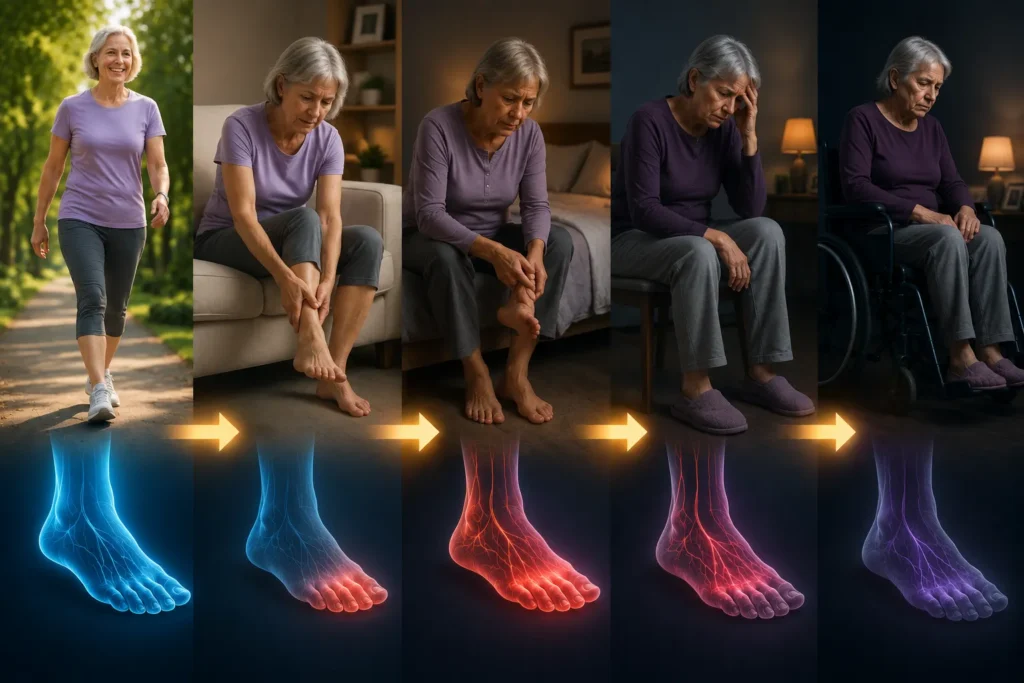
Sometimes it is not only the tingling that becomes noticeable. It is the small adjustments people begin making without realizing it.
One small adjustment may not seem important. But when several begin appearing together, the sensation can take up more space in everyday life.
You may begin paying closer attention to uneven ground, stairs or longer walks.
Standing or remaining active for longer periods may not feel as effortless as it once did.
You may catch yourself checking how they feel throughout the day or wondering when the sensation will return.
Quiet moments may be interrupted by prickling, buzzing or a foot that feels partly asleep.
Walking a little more slowly
Looking down more often while walking
Changing shoes more frequently
Sitting down sooner than usual
Rubbing or moving the feet for relief
Wondering when the sensation will return
“It was not one major change. It was realizing how many little things I had started doing differently because of my feet.”
That realization is often when recurring pins and needles stop feeling like an isolated inconvenience and begin feeling like something worth understanding more clearly.
The next explanation explores why recurring pins and needles may become part of everyday life and what many people wish they had understood sooner.
See Why These Changes Keep Returning → Watch the short explanation before another small adjustment becomes routine.Many people assume the sensation is simply something they have to live with. But when it keeps returning, a different question begins to matter:
Why recurring tingling may follow a recognizable pattern
Why early changes are often easy to dismiss
What may be worth understanding before the sensation becomes routine
Many people spend months focusing only on the feeling itself. But what if recurring pins and needles are simply the signal... rather than the reason they keep happening?
Instead of asking how to ignore recurring pins and needles... many people are beginning to ask why the sensation keeps returning in the first place.
This short presentation explores why recurring tingling, pins and needles and numbness may follow a pattern that many people never realize until much later.
Watch The Full Explanation → The presentation takes only a few minutes to watch.
Recurring pins and needles can feel different from person to person, but many people use surprisingly similar words to describe what they notice.
It feels like my foot suddenly falls asleep, even when I have not been sitting in an unusual position.
SUDDEN TINGLINGThe tingling comes and goes, but lately it seems to return more often than it used to.
MORE FREQUENTSome nights the prickling sensation becomes much harder to ignore once I get into bed.
NOTICEABLE AT NIGHTAfter walking or standing for a while, I sometimes become much more aware of how my feet feel.
DURING DAILY ACTIVITYI keep rubbing, stretching or moving my feet, hoping the strange sensation will fade away.
SEARCHING FOR RELIEFI did not think much of it at first, but now I seem to notice the sensation almost every day.
HARDER TO DISMISSThe sensation may no longer feel like an isolated event. It may be becoming part of a recurring pattern involving tingling, numbness, prickling or burning in the feet.
The short presentation below explores why recurring sensations in the feet may continue returning and why many people overlook the pattern until it becomes much more noticeable.
Watch the Full Explanation → Continue to the short presentation before dismissing the sensation again.Answers to some of the most common questions people ask after noticing recurring tingling, prickling or "pins and needles" sensations in their feet.
Pins and needles can appear for many different reasons and may come and go over time. When the sensation begins happening more frequently or becomes part of your daily routine, many people start looking more closely at possible patterns rather than isolated episodes.
Not always. Some people experience occasional episodes, while others notice the sensation returning more often over weeks or months. Paying attention to changes in frequency may provide useful clues about what is happening.
Many people report becoming more aware of tingling sensations when they are resting or trying to sleep. With fewer distractions during the evening, recurring sensations may simply become easier to notice.
Yes. Some people notice tingling, buzzing or prickling without significant discomfort. Others may experience numbness or burning sensations instead. The experience can vary from person to person.
Yes. Some people notice the sensation in one foot, while others describe similar feelings affecting both feet. The pattern and intensity may differ over time.
Many people dismiss occasional tingling at first. However, when it begins happening more frequently or becomes part of everyday life, understanding why the sensation keeps returning often becomes an important next step.
Some people notice changes in how often the sensation appears, how long it lasts, or whether it begins affecting everyday activities. Recognizing these patterns may help you better understand what you are experiencing.
Many visitors choose to watch the short educational presentation linked on this page, where recurring tingling, numbness and burning sensations are explored in greater detail.
Explore other common sensations and patterns that may appear alongside pins and needles in the feet.
Watch the short presentation that explores tingling, numbness and burning sensations in greater detail.
Explore additional educational information about peripheral nerves, burning sensations, foot health and balance from recognized public health organizations.
General educational information about peripheral nerves, symptoms and neuropathy from the National Institute of Neurological Disorders and Stroke.
Visit Official Resource ↗Consumer-friendly information about peripheral nerve disorders from the U.S. National Library of Medicine.
Visit Official Resource ↗Educational information about balance, mobility and safety concerns that may affect older adults.
Visit Official Resource ↗General information about foot symptoms, foot care and common conditions affecting the feet and ankles.
Visit Official Resource ↗